Spring Daisy Bunny Bouquet Embroidery Review
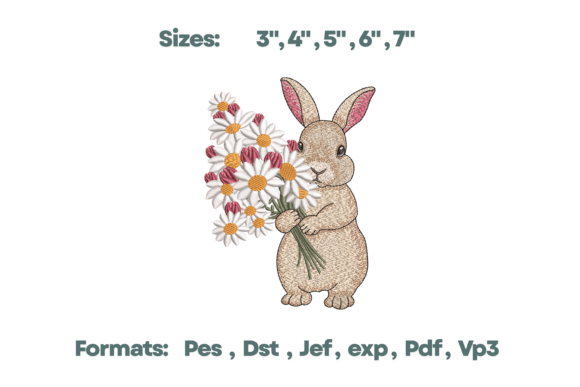
As a designer who has spent years curating assets for both personal craft projects and commercial production, I approach every new machine embroidery design with a specific set of questions. Does the stitch count match the visual complexity? Will the density hold up on stretchy fabric? Most importantly, does it translate from a digital preview to a tangible, high-quality finished product? When I first loaded the Spring Daisy Bunny Bouquet Embroidery file into my digitizing software, the immediate impression was one of whimsical charm. This is not a minimalist line art piece; it is a highly textured pattern featuring a sweet rabbit offering a giant bundle of flowers. It screams spring freshness, but as any seasoned embroiderer knows, "highly textured" can sometimes be a code word for potential stitching headaches if not managed correctly.
The Visual Weight and Mood of the Design
The layout of this design is substantial. The rabbit isn't just peeking out; it is holding a massive bouquet that dominates the composition. This creates a strong focal point, which is excellent for items where you want the design to be the star, such as a custom tote bag design or a statement patch. The mood is undeniably cheerful and nostalgic, fitting perfectly into the Easter season while remaining versatile enough for general spring decor. However, the sheer volume of elements—the petals, the bunny's fur, the leaves—means the stitch density is likely quite high in certain areas.
When evaluating an embroidery file like this, I always look at how the different stitch types interact. The description mentions a "highly textured pattern," suggesting a mix of fill stitch for the bulk of the flowers and bunny, potentially accented with satin stitch for outlines or smaller details. In a real-world scenario, this combination can create beautiful depth, but it requires careful thread tension management. If the fill stitches are too tight against satin edges, you risk puckering, especially on lighter fabrics. The visual personality here is bold and cute, making it ideal for a handmade product intended to bring a smile to a customer's face, whether it's a nursery item or a boutique shop sign.
Real-World Application: A Custom Tote Bag Scenario
To truly test the viability of the Spring Daisy Bunny Bouquet Embroidery, let's imagine a practical use case. Suppose I am preparing a run of canvas tote bags for a local craft fair. The goal is to sell these as reusable shopping bags or gift carriers. Canvas is generally forgiving, but the thickness of the material combined with a large, dense design requires attention to the backing. I would start by hooping the canvas with a cutaway stabilizer rather than a tear-away one. Because the bouquet is "giant" and the rabbit is detailed, the needle will penetrate the fabric many times in the same area. Without a sturdy stabilizer, the back of the finished product could look messy, or worse, the front could pucker, ruining the professional look.
In this scenario, the placement is key. Centering this design on a standard 15x16 inch tote bag works well, provided the hoop size accommodates the full width without needing to re-hoop mid-stitch. Re-hooping risks shifting the alignment between the bunny and the flowers, which would be disastrous for a commercial embroidery run. If I were using this for custom apparel, specifically a heavy cotton sweatshirt, the texture of the knit might fight against the intricate details of the daisy petals. Here, I would recommend testing the design on a scrap piece of the actual sweatshirt fabric first. If the fabric stretches too much under the tension of the dense stitching, the design might distort. For a baby embroidery project, perhaps on a soft fleece blanket, the plush texture of the fleece would actually complement the fluffy appearance of the bunny, creating a very tactile and appealing personalized gift.
Navigating Fabric Challenges and Limitations
While the Spring Daisy Bunny Bouquet Embroidery is visually stunning, it is not a "one-size-fits-all" solution. There are specific situations where this design should be used with caution. First, avoid using it on thin or delicate fabrics like chiffon or lightweight silk. The weight of the thread required to render the "giant bundle of flowers" will overwhelm the fabric, causing it to sag or tear. Similarly, on dark fabrics, the light colors of the daisies and the white rabbit will require significant underlay stitching to prevent the background color from showing through. This increases the stitch count and the time per project, which impacts your bottom line if you are an Etsy seller calculating pricing.
Curved surfaces present another challenge. Attempting to embroider this complex design on a baseball cap is risky. The curve of the cap panel can cause the straight lines of the flower stems or the rabbit's ears to warp, leading to a distorted image. Unless you have a specialized cap frame and extensive experience with curved surfaces, I would advise limiting this design to flat panels like pillow covers, aprons, or tea towels. Furthermore, products that require frequent washing, such as kitchen towels, need to be evaluated for thread durability. While modern polyester threads are durable, the sheer volume of stitching in this design means there is more surface area for lint accumulation and potential snagging over time.
Strategic Advice for Small Business Owners
For creative entrepreneurs and small shop owners, the value of an embroidery project lies in its ability to elevate brand perception. The Spring Daisy Bunny Bouquet Embroidery has the potential to do exactly that. A well-executed version of this design on a high-quality hoodie or a linen napkin signals care and craftsmanship. It moves the item from a generic commodity to a collectible piece. However, to maintain that level of professionalism, you must verify the licensing terms before selling finished items. Ensure you have the right to use this digital embroidery file for commercial purposes, whether you are selling the physical goods or offering them as part of a service.
Before committing to a full production run, create a printable mockup of the design on your intended product. View it in black and white to check contrast levels. Sometimes, what looks colorful and vibrant on a screen loses definition when printed or stitched in monochrome. Check the small details: are the bunny's eyes distinct? Are the individual petals separated clearly? If the stitch density is too high, these fine points might merge into a blob of thread. Adjusting the thread colors to ensure they pop against the fabric background is also crucial. A muted yellow daisy on a cream tote bag will disappear, whereas a bright yellow will draw the eye immediately.
Final Thoughts on Design Viability
Ultimately, the Spring Daisy Bunny Bouquet Embroidery is a powerful asset for those looking to capitalize on the seasonal demand for spring and Easter themes. Its charm is undeniable, and its application in holiday embroidery markets is vast. From embroidered patches for denim jackets to decorative accents on nursery curtains, the possibilities are exciting. But success depends on the execution. Respect the density of the design, choose the right stabilizer, and always test on the final fabric. By treating this design asset with the technical respect it deserves, you can transform a digital file into a beloved small shop product that customers will cherish. Whether you are a hobbyist making gifts or a business owner scaling your inventory, this design offers a delightful opportunity to celebrate the season with quality and style.